Cartograph
Spaced repetition system for technical knowledge with evaluations, learning, and gap detection.
View source →Architecture
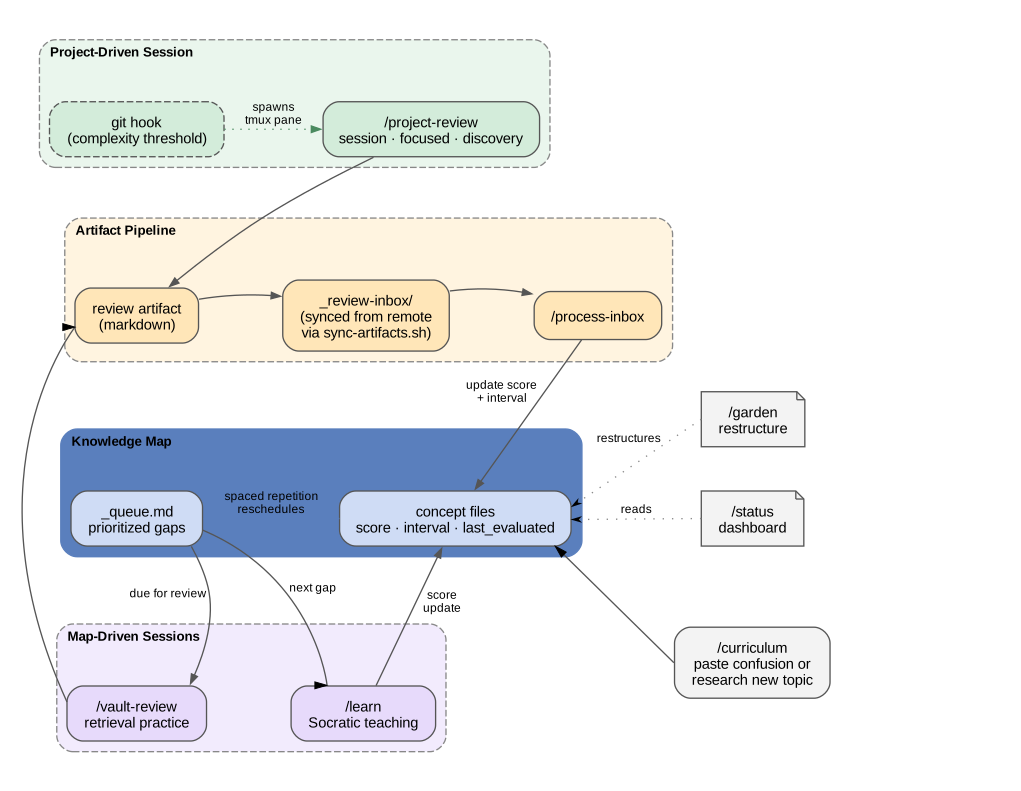
Passive learning through LLMs, lectures, and tutorials builds vague familiarity but not fluency, and nothing objectively tracks what you’ve actually internalized. Cartograph is a spaced repetition system built as a set of Claude Code skills that operates on a flat markdown “knowledge map” — one file per concept, each tracking score, review schedule, and dependencies.
Seven skills cover the loop: /curriculum researches new topics or extracts gaps from pasted confusion, /vault-review and /project-review run retrieval-based evaluations (no LLM assistance during answering), /learn runs Socratic teaching sessions or from-scratch derivation exercises, /process-inbox integrates artifacts into the map, /status surfaces map health, and /garden restructures it. A Stop-event hook watches git complexity and auto-triggers reviews after meaningful coding sessions, with adaptive cooldown.
Design decisions are grounded in educational psychology: spaced retrieval testing ( vs restudy), declining gap-to-retention ratios for interval scheduling, self-explanation () over instructional explaining, and harsh scoring calibrated against the 2026 finding that AI assistance degrades metacognitive accuracy ( = working understanding; is the expected score for LLM-assisted work).